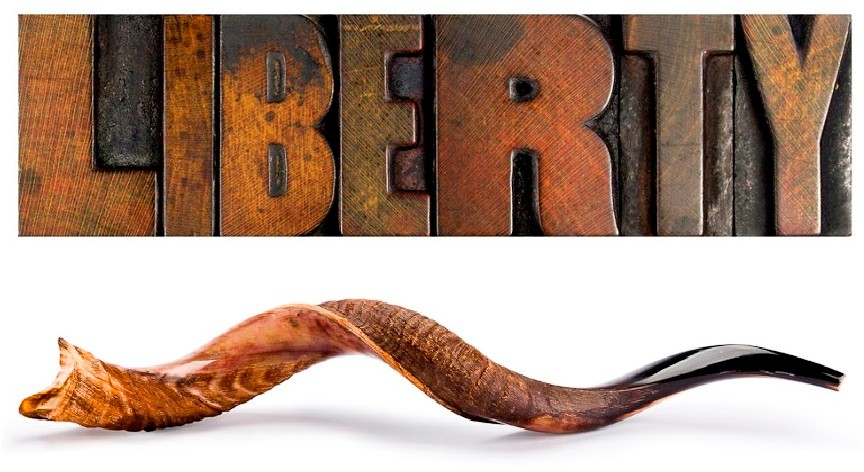
ביום הכפרים תעבירו שופר…וקראתם דרור בארץ לכל ישביה
The very mention of the words “Yom Kippur” raise in many people’s mind the image of standing in shul all day, fasting, praying and saying viduy (confession). Yom Kippur, known as the holiest day of the year, is a somber day for reflection and repentance.
Yet we find in the Torah another dimension to Yom Kippur, that is somewhat surprising and more difficult to square with the characteristics of Yom Kippur at least as we know it today.
The Torah in Leviticus 25:8-12 instructs us to count seven Sabbatical years and to make the fiftieth year the Jubilee year. Besides cessation from all agricultural activity, the Jubilee year has two central features; all land sold between one Jubilee year and another reverts to its original owners and all indentured persons are released.
When does this liberation of land and servants take place? The answer is none other than on Yom Kippur! Verse 25:9 instructs us:
וְהַעֲבַרְתָּ שׁוֹפַר תְּרוּעָה בַּחֹדֶשׁ הַשְּׁבִעִי בֶּעָשׂוֹר לַחֹדֶשׁ בְּיוֹם הַכִּפֻּרִים תַּעֲבִירוּ שׁוֹפָר בְּכָל אַרְצְכֶם
Then you sound the horn loud; in the seventh month, on the tenth day of the month — the Day of Atonement — you shall have the horn sounded throughout the land.
Clearly in biblical times the concept of a synagogue did not exist, the format of our prayers was years away from being invented and the Israelites were not greeted on the eve of Yom Kippur with the somber melodious tune of Kol Nidrei. Nevertheless, it is difficult to imagine a day of repentance, the core of Yom Kippur, doubling as a moment of joyous celebration for all those freed from slavery.
Even more so, when one adds to Yom Kippur a moment in time that also serves to reset fifty years of real estate transactions—even granting that the actual transactions would have not been don on Yom Kippur itself—with families across the nation regaining their estates!
Read our short series on the Historical Dimensions of Yom Kippur
1 – Yom Kippur: A Celebration of Liberty on the Jubilee Year
2 – Yom Kippur: A Festival of Dancing Maidens
3 – The Absence of Yom Kippur in Nevi’im and Ketuvim
4 – Does Ezekiel in 572 B.C.E Know of Yom Kippur?