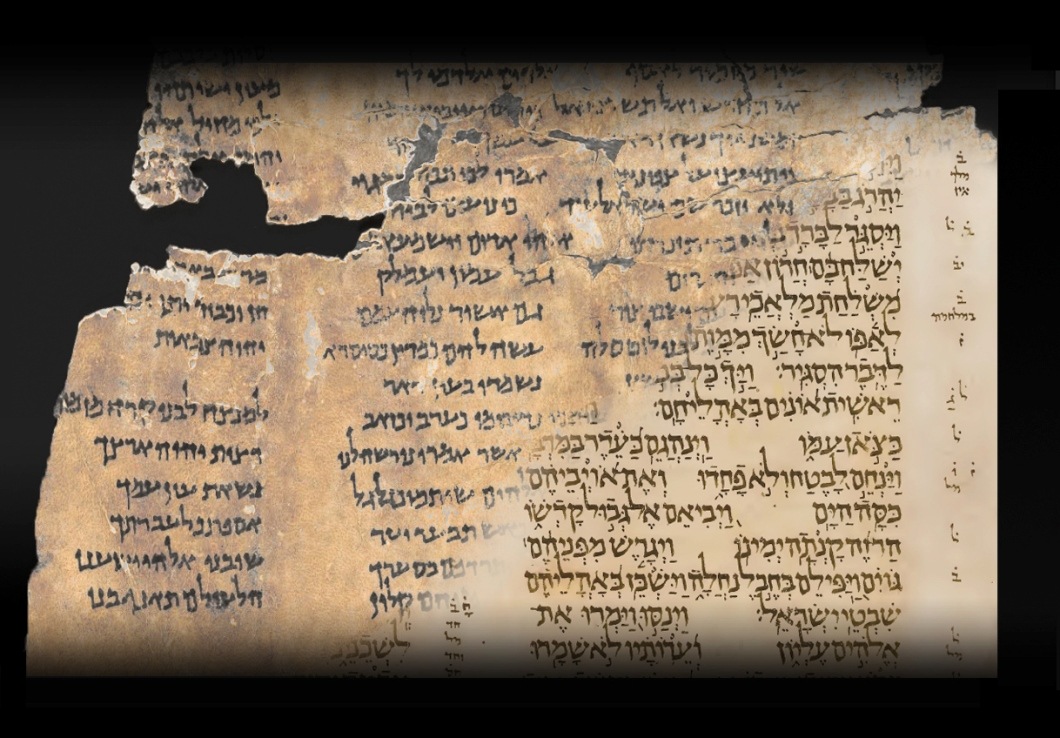
Editions and Translations of MT
Published December 8, 2017
For examples, see Emanuel Tov, Textual Criticism of the Hebrew Bible, 3–11.
For example, the Ketiv/Qere readings are presented in different ways. Some editions present a selection of variant readings. Editions differ in their coverage of the details of the Masorah.
Menahem Cohen, “האידיאה בדבר קדושת הנוסח לאותיותיו וביקורת הטקסט” Deoth 47 (1978): 83–101; repr. The Bible and Us (ed. Uriel Simon; Tel Aviv: Dvir, 1979), 42–69 (Hebrew).
The most well-known edition in this series is the Biblia Hebraica Stuttgartensia; ed. W. Rudolph & K. Elliger; (Stuttgart: Deutsche Bibelgesellschaft, 1967–1977; last printing to date: 1997). The Biblia Hebraica Quinta is incomplete (seven volumes until 2015): Biblia Hebraica Quinta; ed. A. Schenker (Stuttgart: Deutsche Bibelgesellschaft, 2004– ).
Stephen C. Daley, The Textual Basis of English Translations of the Hebrew Bible (Ph.D. diss., Hebrew University, Jerusalem, 2007), 420. When focusing more specifically on variants in the Qumran scrolls and on conjectural emendations, similar trends are visible in the inclusion of non-Masoretic readings in the translations.
תנ”ך JPS Hebrew–English Tanach, The Traditional Hebrew Text and the New JPS Translation; 2nd ed. (Philadelphia: Jewish Publication Society, 1999).
For examples, see Emanuel Tov, “Textual Criticism,” in The Jewish Study Bible, 2nd ed. (eds. Adele Berlin and Marc Z. Brettler; Oxford and New York: Oxford University Press, 2014), 2149–52.
The New International Version (Grand Rapids, MI: Zondervan, 1978).
The LXX omits the second word, which indicates that there is a textual problem here, of which the reader of the NJPS is unaware.
For similar examples in NJPS, see Josh 1:15; 5:2, 6; 10:4.
For this reading the note in NJPS quotes “some mss. (cf. Minhat Shai) and Rashi.”
The note in NJPS refers to a note in 1:28 where the text of MT is emended (corrected). In 1 Sam. 1:28 wayishtaḥu (and he bowed low) is translated in NJPS as a plural form (“and they bowed low” = wayishtaḥavu) against all evidence. The NJPS note “A reading in the Talmud (Berakot 61a) implies that Elkanah was there” reflects an exegetical notion, and not an ancient manuscript. Likewise, the Vulgate (not mentioned in the NJPS) has a plural form, but this rendering, too, may be based on exegesis.